Nashville and Davidson County, Tennessee
A Plain Guide to Crawl Space Encapsulation in Nashville
A sour smell in the back bedroom every time the AC kicks on. A spot in the hall that gives a little underfoot. Ground plastic that has slid into a heap against one wall. Those are the usual reasons Nashville homeowners start reading about crawl space encapsulation. Here is what it is, why our summers push so much water under the floor, and what the work typically costs.
Crawl space encapsulation wraps the dirt floor, and usually the walls, in a taped liner, shuts the vents and pairs the sealed space with a drying unit, most often a dehumidifier. This Old House (2026) gives $1,500–$15,000 for the whole job, with $5,500 as its average. If water pools under the house after storms, it has to be drained first.
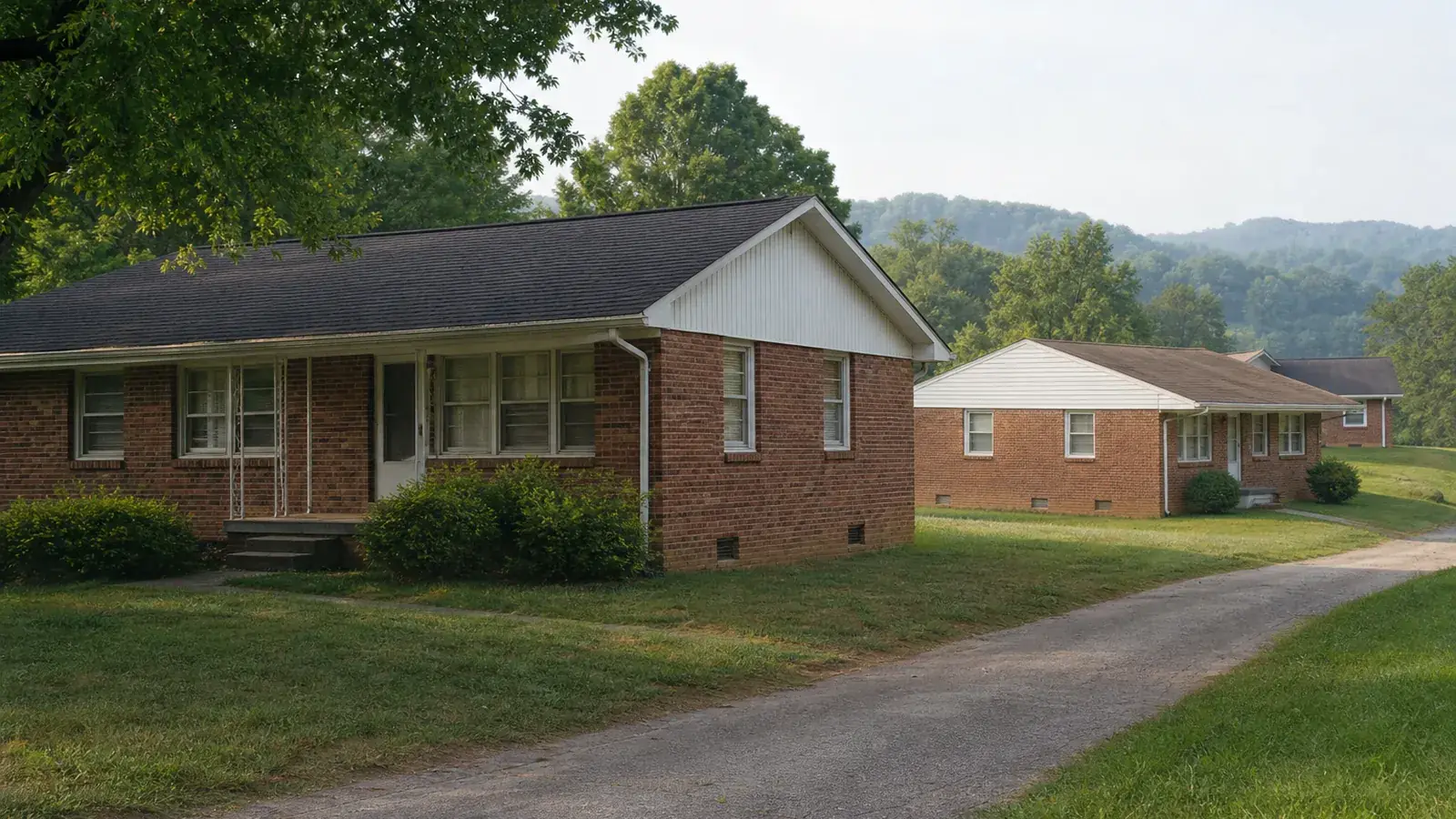
July air under a Nashville floor
Old building practice says vents keep a crawl space dry. In a Nashville summer they mostly let wet air in. Take NOAA's 1991–2020 hourly normals for Nashville International Airport and average them by month: the outdoor dew point comes to 64.6°F in June, 68.0°F in July, 66.6°F in August and 60.4°F in September. Anything under the house that is cooler than that, such as a supply duct carrying air-conditioned air, a cold-water line or the underside of the subfloor, collects condensation the way a glass of iced tea does on the porch.
Then there is the rain. The same airport averages 50.5 inches a year, and on 81 of those days at least 0.1 inch falls (NOAA normals). Ground that gets soaked so many times a year gives off vapor into the crawl space all season, puddles or no puddles.
Rock close to the surface
Much of Nashville sits in the Nashville Basin, and the USDA's Natural Resources Conservation Service describes its bedrock as Ordovician limestone, with sinkholes common and, in many areas, limestone outcrops almost everywhere. On the basin's limestone flats, NRCS lists silt loam to silty clay soils 22 to 60 inches deep. Rain that soaks into a thin layer of clayey soil over rock has little room to sink, so it can travel sideways along the rock and seep through a foundation wall into a crawl space that sits lower than the yard.
That is why many crawl spaces here are wet from below as well as from the air, and why a good inspection looks at both before anyone prices plastic.
Pages by problem
- Crawl space dehumidifiersWhy a sealed crawl needs one, sizing questions, and where the water goes.
- Crawl space repairRotted wood, soft floors, fallen insulation and wet ground.
- Vapor barriers and linersGround sheets versus full liners, failure signs, and rocky floors.
- Basement waterproofingInterior drains, sump pumps, cracks and backwater valves.
- What encapsulation costs (2026)Each line from a named national guide, plus a 1,000 sq ft example.
Before you call
- Five checks before sealingRadon, summer air, rock and drainage, permits, and the contractor's license.
- What that sign usually meansA smell, a sag, a puddle or a sweating duct, each matched to the right page.
When is crawl space encapsulation the right fix?
It is usually the right answer when the problem is damp air and damp ground: a musty smell indoors, sweating ducts, mildew on joists, or ground plastic that is torn or missing. It is not the first step in three cases.
- Water stands after rain. A drain or sump comes first, or the liner holds the water against the house.
- Wood is already soft. Rotted sill plates, joists or girders get repaired before they are covered; see crawl space repair.
- The leak is in a basement. That calls for drains and a sump at the walls, covered on the basement waterproofing page.
Most sealed crawl spaces in this climate also need active drying. The crawl space dehumidifier page covers sizing and drainage.
Test for radon before the space is sealed
Metro Public Health says the EPA lists Davidson County as an area with high potential for elevated radon, and that about 40 percent of the 4,152 homes tested in the county showed elevated levels. The EPA's action level is 4 picocuries per liter. Sealing a crawl space changes how air moves between the ground and the house, so a test before the work and another after it tell you whether anything changed.
Age matters too. About 41% of Nashville's homes were built before 1980 (U.S. Census, ACS 2020–2024). In a house that old, the original ground plastic, if there ever was any, may well be brittle or gone. Our checklist before sealing goes through radon, drainage, permits and licenses in order.
Who phones you back, and what to ask them
This site publishes information; it doesn't send anyone under houses. When you fill in the form, the details are passed to one independent specialist in Nashville crawl spaces, who rings you to hear what's going on. Tennessee's Board for Licensing Contractors requires a Home Improvement license in Davidson County for residential remodeling projects from $3,000 to $24,999, and a contractor's license from $25,000 up. Ask for the license number and look it up on the state's verify.tn.gov site. Ask for a written, itemized price and warranty terms, and compare it with the crawl space encapsulation cost guide (2026).
Questions homeowners ask
Is crawl space encapsulation worth it in Nashville?
It tends to pay off when the crawl space is damp most of the summer: a musty smell indoors, sweating ducts, wet insulation or mildew on the joists. With July dew points near 68°F at the airport (NOAA hourly normals), a vented crawl space here takes in wet air for months. If the space is dry and the plastic is intact, it may not be needed yet.
Can I just close the crawl space vents?
Shutting vents by themselves tends to backfire: the damp air already down there has nowhere to go. Vents get closed as one step of a full job, alongside the sealed liner and a dehumidifier or other drying method.
Will encapsulation fix a soft floor?
No. A dry crawl space stops rot from spreading, yet a joist that is already soft stays soft. Fixr's national figure for fixing a sagging floor is $1,000–$5,000. Get the framing probed and repaired first, then seal.
What happens after I send a request?
Your details reach one independent Nashville crawl space specialist, who phones to hear what's wrong and set a time to go under the house. That call is the moment to ask if there is a charge for coming out.
Sources
- NOAA NCEI U.S. Climate Normals 1991-2020, hourly normals (dew point), Nashville International Airport
- USDA NRCS ecological site description, MLRA 123 Nashville Basin (Limestone Flats)
- Metro Nashville Public Health Department: radon information
- U.S. Census Bureau, ACS 2020-2024, Year Structure Built (B25034), Nashville
- Tennessee Board for Licensing Contractors: Home Improvement license
What did you notice under the house?
Pick the closest match and add a line about it: a smell in one room, a soft spot in the floor, water after a storm. A Nashville crawl space specialist will ring to go over it with you.