The Plastic Under Your Floor: Nashville Crawl Space Vapor Barriers
A crawl space vapor barrier looks like nothing more than plastic on dirt. Its job is to stop the soil from feeding moisture into the air under your floor, and once it rips, slides or goes missing, that moisture never stops coming.
Fixr's 2025 guide puts installing or replacing a crawl space vapor barrier at $1,500–$4,000 for a 1,500 sq ft crawl space. A plain ground sheet covers the dirt; a full liner is also sealed to the walls and piers and taped at every seam. Thicker, reinforced material costs more and survives repair visits better.
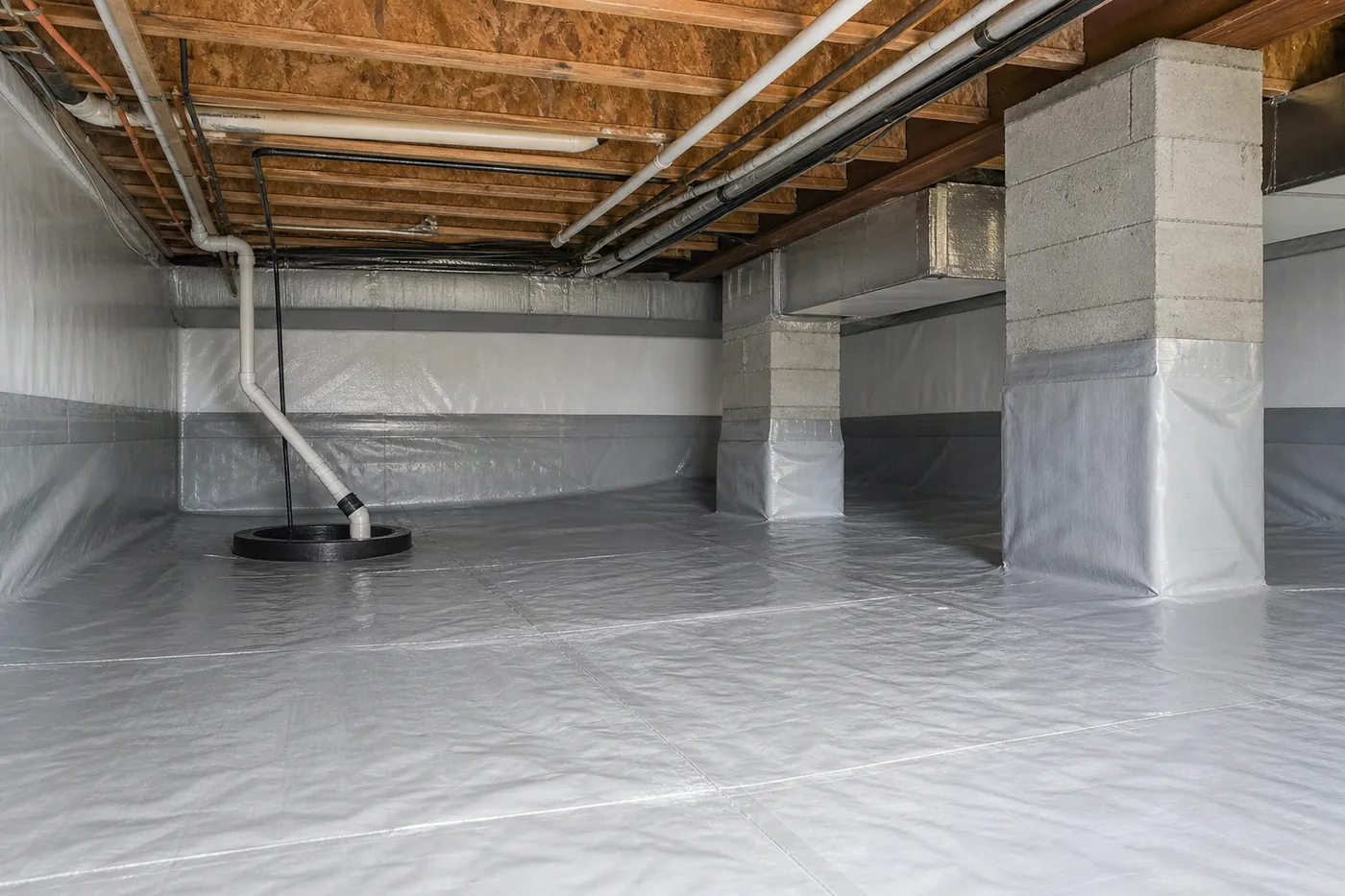
Ground sheet, or a full liner up the walls?
A ground sheet slows the vapor rising from the soil but leaves the walls and the edges open. A full liner is carried up the foundation walls and wrapped around piers, with seams overlapped and taped, so the whole space is wrapped. A liner is the usual base for encapsulation; a ground sheet alone is a smaller fix for a vented crawl space. Ask for the thickness in mil, whether the sheet is reinforced, and how far up the walls it goes.
What does a failed crawl space vapor barrier look like?
- You can see dirt: the sheets have gaps, or have been pushed into a pile.
- After a storm, water lies on the plastic in pools.
- Overlaps are loose, untaped, or the tape has peeled.
- The underside of the sheet, or the wood just above it, has gone dark and blotchy.
- The path from the access door is worn through to soil.
Rock, slope and water under Nashville houses
The USDA's soil scientists describe the Nashville Basin as limestone country, with outcrops almost everywhere in many areas. Under a house that can mean ledges of rock poking through a thin layer of soil. Plastic stretched over a sharp edge wears through, so ask how the installer will pad or cut around rock. With 50.5 inches of rain a year at the airport (NOAA normals), also ask where water goes if it gets under the sheet: a liner over a wet floor needs a drain or sump at the low spot.
What a good install includes
- Old plastic, wood scraps and fallen insulation removed first.
- Seams overlapped and sealed, with the liner fastened and sealed at the walls and around each pier.
- A strip at the top of the walls left open for termite inspection.
- A plan for any standing water before the sheet goes down.
The liner is one line of several; the 2026 encapsulation price table shows the others.
Questions homeowners ask
How thick should a crawl space vapor barrier be?
Thin builder sheets tear easily under knees and tools. For a crawl space that people will crawl through for plumbing or ductwork, a thicker, reinforced liner holds up better. Ask the specialist for the thickness in mil and the reinforcement, and compare quotes on the same material.
What did you notice under the house?
Pick the closest match and add a line about it: a smell in one room, a soft spot in the floor, water after a storm. A Nashville crawl space specialist will ring to go over it with you.